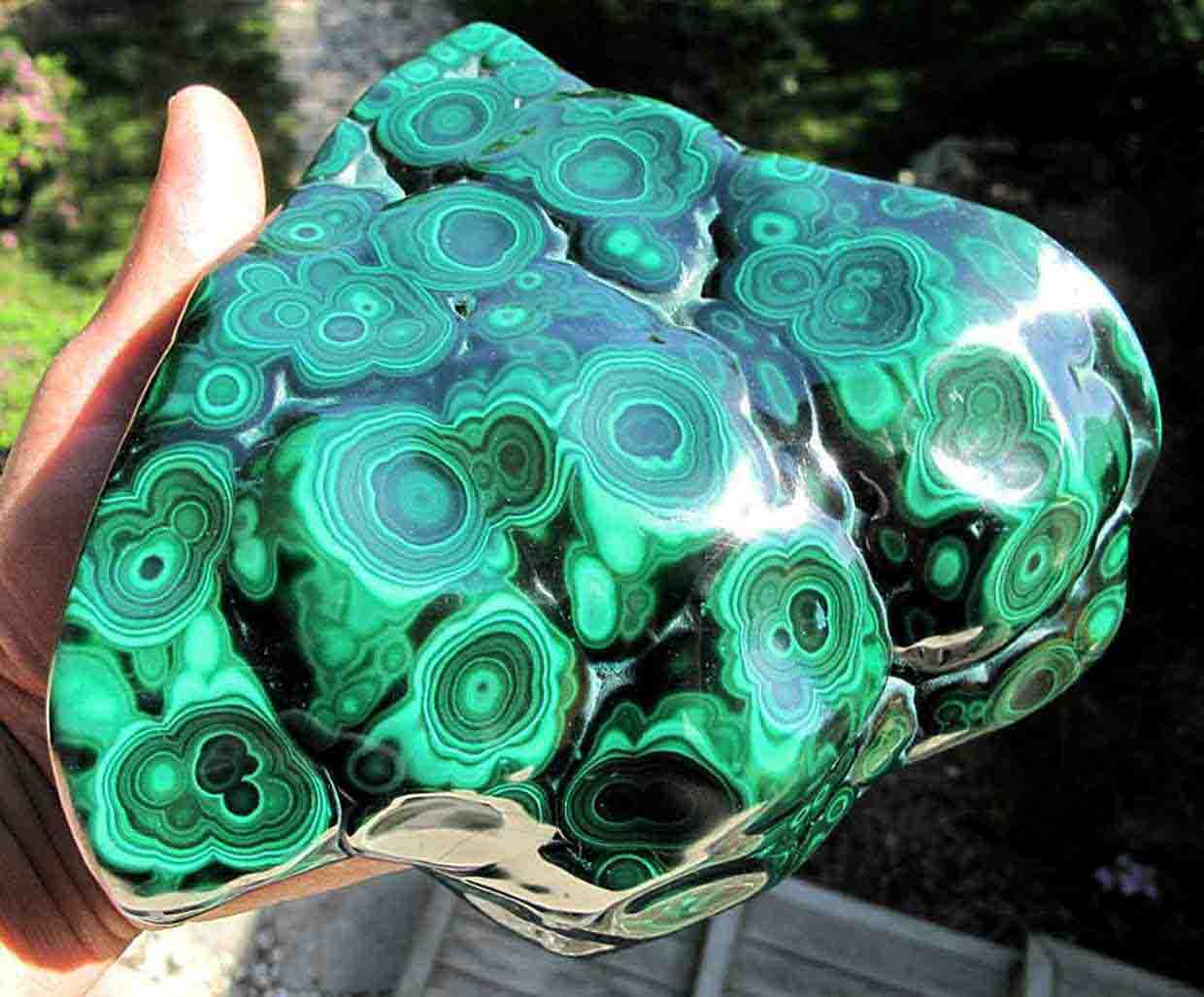
Malachite: The Verdant Enigma – A Journey into the World of the Peacock Stone
From the depths of ancient Egyptian tombs to the grand halls of Russian palaces, and now adorning modern jewelry collections, Malachite has captivated humanity for millennia. This mesmerizing green gemstone, with its distinctive swirling patterns and vibrant hues, is more than just a beautiful adornment; it is a stone steeped in history, rich in symbolism, and deeply connected to the Earth’s transformative power. Often called the "peacock stone" for its iridescent, eye-like patterns or the "velvet stone" for its plush, fibrous varieties, Malachite is a true enigma, inviting us to delve into its geological origins, cultural significance, and enduring allure.
Join us on an extensive journey to uncover the secrets of Malachite, exploring its fascinating past, understanding its formation, appreciating its unique characteristics, and learning how to cherish this verdant treasure in your own life.
A Whisper from the Past: Introduction and History
Malachite is a copper carbonate hydroxide mineral, renowned for its striking green color and unique banding. Its name is believed to derive from the Greek word malakhe, meaning "mallow," in reference to the mallow leaf’s green color, or possibly from malakos, meaning "soft," alluding to its relative softness compared to other gemstones. Whatever its etymological roots, Malachite’s visual impact is undeniable, making it one of the most recognizable and historically significant minerals.
The history of Malachite is as rich and layered as its distinctive patterns. Its story begins in antiquity, where its vibrant green quickly caught the eye of early civilizations.
Ancient Egypt: The Stone of Transformation and Protection
Perhaps nowhere was Malachite more revered than in ancient Egypt, where its use dates back as far as 3000 BCE. The Egyptians associated the color green with new life, fertility, and resurrection, making Malachite a powerful symbol of rebirth and vitality. It was believed to bring joy, hope, and good fortune, and its presence was thought to ward off evil and danger.
- Cleopatra’s Beauty Secret: One of the most famous historical anecdotes involves Queen Cleopatra, who is said to have ground Malachite into a fine powder to use as eyeshadow. This wasn’t just for aesthetic appeal; it was also believed to protect the eyes from disease and ward off the "evil eye."
- Tomb Decorations and Amulets: Malachite was extensively used in funerary art and as decorative inlays in tombs, often accompanying the deceased into the afterlife to ensure their rebirth. Amulets crafted from Malachite were worn for protection, especially for children, and were often carved into scarabs or other protective symbols.
- Pigment of Power: Beyond ornamentation, Malachite was a crucial source for green pigment, known as "mineral green" or "mountain green." This pigment adorned frescoes, papyri, and various artifacts, ensuring its vivid presence throughout Egyptian art and architecture. The goddess Hathor, associated with joy, love, and femininity, was sometimes referred to as "the Lady of Malachite," further cementing its spiritual significance.
Ancient Greece and Rome: Ornamentation and Talismans
The Greeks and Romans also held Malachite in high esteem. They carved it into various ornamental objects, jewelry, and talismans. Pliny the Elder, the Roman naturalist, documented Malachite in his monumental work "Naturalis Historia," noting its use for decorative purposes and as a protective stone. In Rome, it was particularly valued for its purported ability to protect against lightning and witchcraft, and small pieces were often worn by children to keep them safe. Architectural elements, such as those found in the Temple of Diana at Ephesus, were sometimes adorned with Malachite.
The Middle Ages and Renaissance: Healing and Magic
Throughout the European Middle Ages, Malachite continued its role as a protective and healing stone. It was believed to guard against the "evil eye," enchantments, and negative spirits. Folk remedies incorporated Malachite for a variety of ailments, from stomach issues and colic to menstrual cramps and even to aid in childbirth – earning it the moniker "the midwife stone." Its vibrant green pigment remained a valuable commodity for artists during the Renaissance and Baroque periods, adding depth and richness to their palettes.
Imperial Russia: The Zenith of Malachite Grandeur
The 17th to 19th centuries witnessed Malachite reach its zenith, particularly in Russia. The discovery of immense, high-quality deposits in the Ural Mountains transformed Malachite from a precious gemstone into a material for breathtaking architectural and decorative masterpieces. The Demidov family, powerful industrialists who owned vast mining operations in the Urals, became synonymous with Malachite, commissioning extraordinary objects and installations.
- The Malachite Room: The most iconic example of this period is the "Malachite Room" in the Winter Palace (now part of the Hermitage Museum) in St. Petersburg. Designed by Alexander Brullov in the 1830s, this opulent chamber is entirely paneled and decorated with Malachite, featuring columns, pilasters, and fireplaces crafted from the stone. The sheer scale and intricate craftsmanship required to create such a space, using the technique of Russian mosaic (where thin slices of malachite are precisely fitted together to create a seamless surface), are truly awe-inspiring.
- St. Isaac’s Cathedral: Another magnificent example is found in St. Isaac’s Cathedral, also in St. Petersburg, where Malachite columns and decorative elements adorn the iconostasis, showcasing the stone’s profound visual impact when used on a grand scale.
- Furniture and Objects: Beyond architecture, Russian artisans crafted an astonishing array of Malachite objects: monumental vases, intricate tabletops, elaborate boxes, jewelry, and even entire pieces of furniture, all symbolizing imperial wealth, power, and refined taste.
The Modern Era: Renewed Appreciation
While the grand scale of Russian Malachite use is a thing of the past (due to the depletion of the massive Ural deposits), Malachite continues to be cherished today. It enjoyed a resurgence in popularity during the Art Nouveau and Art Deco periods, where its bold color and patterns complemented the distinctive styles of these eras. Today, it remains a favorite for jewelry designers, carvers, and collectors, appreciated for its unique beauty and its enduring historical and symbolic resonance.
Earth’s Green Masterpiece: Geological Formation and Where it is Found
To truly appreciate Malachite, one must understand the incredible geological processes that bring this verdant mineral to life. Malachite is not a primary mineral, meaning it doesn’t form directly from molten rock. Instead, it is a secondary mineral, a product of alteration and transformation, often found in the oxidation zones of copper deposits.
The Genesis of Green: How Malachite Forms
The formation of Malachite is a fascinating chemical dance involving copper, water, and carbon dioxide. Here’s a simplified breakdown:
- Primary Copper Deposits: The story begins with primary copper minerals, such as chalcopyrite (a copper iron sulfide), bornite, or native copper, typically found deep within the Earth’s crust in hydrothermal veins or disseminated deposits.
- Oxidation Zone: Over geological time, tectonic forces and erosion bring these copper-rich rocks closer to the Earth’s surface. Here, they are exposed to oxygenated groundwater and atmospheric carbon dioxide (CO2). This upper zone, characterized by the presence of oxygen, is called the oxidation zone.
- Chemical Reactions: In this zone, the primary copper sulfides react with oxygen and water, leading to the formation of soluble copper sulfates. As these copper-rich solutions percolate downwards, they encounter rocks containing carbonate minerals (like limestone or dolomite) or simply absorb dissolved CO2 from the groundwater.
- Malachite Precipitation: When the copper-bearing solutions react with carbonated water or carbonate rocks, the conditions become suitable for the precipitation of copper carbonate hydroxide – which is Malachite. The chemical formula for Malachite is Cu₂CO₃(OH)₂.
- Growth Patterns: The characteristic banding of Malachite is a result of this precipitation process. As the copper-rich solutions seep through cracks and cavities, they deposit layers of Malachite. Variations in the concentration of copper, the presence of impurities (like iron or manganese), and changes in the chemical environment or growth rate cause the subtle differences in color and texture that create the distinct concentric bands, swirls, and "eyes" we admire. These layers build up over time, often in botryoidal (grape-like), stalactitic (icicle-like), or massive forms.
Malachite is often found in close association with other secondary copper minerals, which can create stunning mineral specimens. These include:
- Azurite: A vibrant blue copper carbonate, often forming beautiful bicolor specimens known as "azure-malachite."
- Chrysocolla: A blue-green hydrous copper silicate, forming unique combinations.
- Cuprite: A red copper oxide, creating striking red and green contrasts.
- Native Copper: Pure metallic copper, sometimes found as inclusions within Malachite.
Global Green Veins: Where Malachite is Discovered
Malachite is found in copper mining regions across the globe, but certain localities are particularly renowned for their quantity and quality.
- Democratic Republic of Congo (DRC): Today, the DRC is by far the most significant global producer of high-quality Malachite. The vast copper belt in the Katanga region (formerly Shaba Province) yields enormous quantities of Malachite, ranging from massive pieces suitable for carving to fine-quality material for jewelry. Congolese Malachite is known for its rich green color and intricate banding patterns.
- Russia (Ural Mountains): Historically, the Ural Mountains of Russia were the world’s most famous source of Malachite, particularly from the Gumeshevsky and Mednorudyansk mines. These deposits were responsible for the magnificent Malachite artwork of Imperial Russia. While these mines are largely depleted of large, high-grade specimens today, they remain legendary in the history of the gemstone.
- Australia: Australia has several notable Malachite occurrences, particularly in Queensland (e.g., Mount Isa) and South Australia (e.g., Burra Burra mine). These deposits produce attractive Malachite, though typically not on the scale of the DRC or historical Russia.
- United States: In the United States, significant Malachite deposits have been found in the copper mining districts of Arizona (especially Bisbee, Morenci, and Copper Queen mines) and New Mexico. These localities are prized for their beautiful specimens, often in combination with Azurite.
- Other Notable Locations: Malachite is also found in various other countries, including:
- Zambia: Another significant African producer, particularly from the Nchanga Mine.
- Namibia: Known for some fine specimens.
- Chile: A major copper-producing nation, also yields Malachite.
- France: Historically, some deposits in the Lyon region.
- Mexico, China, and Peru: Also contribute to the global supply.
The geological journey of Malachite, from raw copper ore to its stunning banded forms, underscores its natural beauty and the slow, intricate processes that shape our planet’s mineral treasures.
The Signature of Green: Physical Characteristics
Malachite’s allure lies in its distinct physical characteristics, which make it instantly recognizable and highly prized.
- Color: The most defining characteristic of Malachite is its striking green color. This color is entirely due to the presence of copper in its chemical composition. The green ranges from a pale, pastel mint green to a deep, intense emerald green, and even an almost blackish green. Crucially, Malachite is always green; any other color would indicate a different mineral or a fake. The variations in shades of green within a single stone create its famous banding.
- Luster: The luster of Malachite can vary depending on its form.
- Silky/Fibrous: When Malachite forms in fine, radiating fibers, it exhibits a beautiful silky or chatoyant luster, often giving it a "velvet" or "plush" appearance.
- Vitreous: When polished, massive or botryoidal Malachite typically displays a vitreous (glassy) luster, which enhances the depth and vibrancy of its patterns.
- Dull/Earthy: Raw, unpolished Malachite can have a dull or earthy luster.
- Hardness: Malachite is relatively soft, ranking between 3.5 to 4 on the Mohs scale of mineral hardness. This places it roughly on par with a copper coin, meaning it can be easily scratched by harder materials like quartz, steel, or even vigorous rubbing against other gemstones. Its softness is a crucial factor in its care and use in jewelry.
- Clarity: Malachite is typically opaque. While very thin slices might show some translucency at the edges, it is generally considered an opaque gemstone. This opacity is what allows its vibrant color and intricate patterns to truly stand out.
- Crystal System: Malachite crystallizes in the monoclinic system. However, well-formed, distinct crystals are exceedingly rare. Malachite almost always occurs in massive, botryoidal (grape-like), stalactitic (icicle-like), mammillary (breast-like), or fibrous habits. When microscopic crystals do form, they are acicular (needle-like) or tabular.
- Streak: The streak (the color of the mineral’s powder when rubbed on an unglazed porcelain plate) of Malachite is light green.
- Specific Gravity: Malachite has a relatively high specific gravity, ranging from 3.6 to 4.0. This means it feels noticeably heavier than many other stones of a similar size, a useful characteristic for identification.
- Fracture: Its fracture is typically uneven to sub-conchoidal (shell-like).
- Tenacity: Malachite is brittle, meaning it can chip or break relatively easily if subjected to impact.
- Pleochroism: Malachite exhibits weak pleochroism (the phenomenon where a mineral appears to be different colors when viewed from different angles), but this is rarely observable in its typically opaque forms.
- Fluorescence: Malachite is non-fluorescent under ultraviolet light.
Varieties and Forms: The Art of Pattern
While there aren’t distinct "varieties" in the traditional sense, Malachite’s appearance is heavily influenced by its growth habit and the resulting patterns:
- Banded Malachite: This is the most common and sought-after form, characterized by concentric rings, swirls, or parallel bands of varying shades of green. These patterns, often resembling eyes, waves, or landscape scenes, are what give Malachite its unique artistic appeal.
- Botryoidal Malachite: This form grows in rounded, grape-like clusters, often with a velvety surface.
- Stalactitic Malachite: Forms as icicle-like growths within cavities, sometimes with hollow centers.
- Fibrous Malachite (Velvet Malachite): Characterized by fine, radiating fibers that give the stone a soft, plush, or silky appearance, sometimes exhibiting chatoyancy. This form is particularly delicate.
- Malachite-Azurite (Azure-Malachite): A stunning natural combination of green Malachite and blue Azurite, often forming intricate patterns of contrasting colors. These specimens are highly prized by collectors and designers alike.
- Malachite-Chrysocolla: A blend of green Malachite and blue-green Chrysocolla, creating a beautiful spectrum of blues and greens.
- Malachite-Cuprite: A less common but striking combination of green Malachite with red Cuprite, offering a vibrant contrast.
These physical characteristics, especially its captivating patterns and signature green, solidify Malachite’s status as a truly unique and beautiful mineral.
The Soul of Green: Symbolism, Cultural Meaning, and Folklore
Beyond its physical beauty, Malachite holds a profound place in human culture, imbued with rich symbolism, mystical meanings, and fascinating folklore that have evolved over millennia. Its deep green color, reminiscent of lush forests and new growth, naturally connects it to nature, vitality, and the heart.
A Stone of Protection and Transformation:
The most enduring symbolism associated with Malachite is protection. From ancient Egypt to medieval Europe, it has been revered as a powerful guardian stone.
- Shield Against Evil: It is believed to create a strong energetic shield around its wearer, deflecting negative energies, psychic attacks, and the "evil eye." Its historical use in amulets for children underscored its protective qualities against harm.
- Traveler’s Talisman: Malachite has long been considered a traveler’s stone, offering protection during journeys, especially against falls and accidents. It was particularly believed to protect against air travel sickness and vertigo.
- Transformation and Change: Malachite’s geological formation—a process of transformation from copper ore—mirrors its symbolic meaning as a stone of profound change and growth. It is believed to help individuals shed old patterns, release past traumas, and embrace new beginnings. It encourages risk-taking and breaking unhealthy ties, paving the way for personal evolution.
Heart Chakra Connection: Love and Healing:
Its vibrant green color directly links Malachite to the Anahata, the Heart Chakra.
- Unconditional Love and Empathy: As a heart chakra stone, Malachite is believed to open the heart to unconditional love, both for oneself and others. It promotes empathy, compassion, and understanding, fostering healthy relationships.
- Emotional Healing: It is a powerful stone for emotional healing, helping to release suppressed emotions, past traumas, fear, and anxiety. Malachite can bring uncomfortable truths to the surface, allowing for their acknowledgment and eventual release, leading to emotional balance and resilience. It’s said to absorb negative emotions and energies, so it requires regular cleansing.
Healing and Wellness:
Malachite has a long history of use in crystal healing practices, with various purported benefits:
- Pain Relief: Historically, it was placed on painful areas of the body, particularly for menstrual cramps, arthritis, and other inflammatory conditions. Its nickname "the midwife stone" stems from the belief that it eased the pain of childbirth.
- Detoxification: It is believed to aid in detoxification, stimulating the liver and removing toxins from the body.
- Physical Ailments: Some practitioners use Malachite for conditions related to asthma, vertigo, broken bones, and even to boost the immune system. It’s often associated with promoting healthy cell regeneration.
- Emotional Release: Beyond physical pain, its strong energy is thought to draw out and release emotional pain, allowing for clarity and resolution.
Prosperity and Abundance:
In some cultures, particularly in Russia, Malachite was associated with prosperity and abundance. Its deep green color, reminiscent of fertile lands and wealth, made it a symbol of good fortune and attracting money. It was believed to bring success in business ventures and financial growth.
Wisdom and Intuition:
Malachite is also linked to enhancing insight, intuition, and spiritual growth. It is thought to encourage self-reflection, helping individuals to understand their inner world and make conscious choices aligned with their highest good. It can deepen meditation and connect one to higher consciousness.
Folklore and Myths: Whispers of the Ancients:
- The Warning Stone: A fascinating piece of folklore suggests that Malachite will break into pieces to warn its wearer of impending danger. While likely symbolic, it speaks to the stone’s perceived role as a protector and sentinel.
- Nature Spirits and Fairies: In some European traditions, Malachite was associated with forests, nature spirits, and the fae folk. It was believed to protect against mischievous spirits and enhance one’s connection to the natural world.
- Astral Travel: Some esoteric beliefs suggest that Malachite can facilitate astral travel and enhance dream recall, helping one to explore other dimensions of consciousness.
- Zodiac and Planetary Associations: Malachite is often associated with the zodiac signs of Scorpio and Capricorn, and sometimes Aries and Libra. Its planetary association is Venus, linking it further to love, beauty, and harmony. Its element is Earth, grounding its powerful energy.
The symbolism and cultural meaning of Malachite are deeply intertwined with its striking appearance and its historical uses. It stands as a testament to humanity’s long-standing connection with the Earth’s treasures, seeing in them not just beauty, but profound spiritual and protective power.
Artistry in Green: Uses in Jewelry and Design
Malachite’s captivating beauty and unique patterns have made it a favored material for artists, jewelers, and designers throughout history, transforming it from a raw mineral into exquisite works of art.
In the Realm of Jewelry:
Due to its relative softness (3.5-4 on the Mohs scale), Malachite requires careful handling and specific settings in jewelry, but its aesthetic impact makes it well worth the consideration.
- Cabochons: This is the most popular cut for Malachite in jewelry. A cabochon is a polished, unfaceted dome shape that beautifully showcases the stone’s distinctive banding, "eye" patterns, and swirls without the risk of chipping facets. Cabochons are frequently used in rings, pendants, earrings, and bracelets.
- Beads: Malachite beads are widely used in necklaces and bracelets. Their smooth, polished surfaces highlight the varying shades of green and patterns, creating visually rich and tactile pieces.
- Carvings: Malachite’s workability allows it to be carved into intricate forms. Small animal figurines, cameos, intaglios, and decorative pendants are common applications, demonstrating the stone’s artistic versatility.
- Inlays: Its vibrant color and unique patterns make Malachite an excellent choice for inlay work. It is often meticulously cut and fitted into precious metals (gold, silver), wood, or other stones, creating stunning mosaic-like designs in rings, pendants, and decorative boxes.
- Settings: Given its softness, Malachite jewelry is often set in protective bezels (a metal rim that encircles the gemstone) rather than prong settings, which could expose the stone to impacts. It pairs beautifully with both yellow and white gold, as well as sterling silver, each metal enhancing its green hues in different ways.
- Design Eras: Malachite experienced particular popularity during the Art Nouveau and Art Deco periods. Its organic, flowing patterns resonated with Art Nouveau’s naturalistic themes, while its bold color and graphic banding appealed to Art Deco’s geometric and luxurious aesthetic. Contemporary designers continue to incorporate Malachite into both classic and avant-garde pieces.
Decorative Arts and Sculpture: Grandeur and Detail:
Beyond personal adornment, Malachite has been employed on a grand scale in decorative arts and architecture, creating pieces of breathtaking opulence.
- Vases, Bowls, and Boxes: From small, intricately carved boxes to monumental floor vases, Malachite has been shaped into countless decorative objects. The Russian Malachite masterpieces of the 19th century, in particular, showcase the unparalleled craftsmanship involved in creating such items.
- Tabletops and Furniture: Malachite slabs were, and still are, used to create luxurious tabletops, fireplace mantels, and other furniture accents. The "Russian mosaic" technique, where thin veneers of Malachite are expertly joined to cover large surfaces, allowed for the creation of vast, seamless Malachite panels.
- Architectural Elements: As seen in the Malachite Room of the Winter Palace, Malachite has been used for columns, pilasters, wall panels, and other architectural details, transforming interiors into dazzling displays of natural beauty