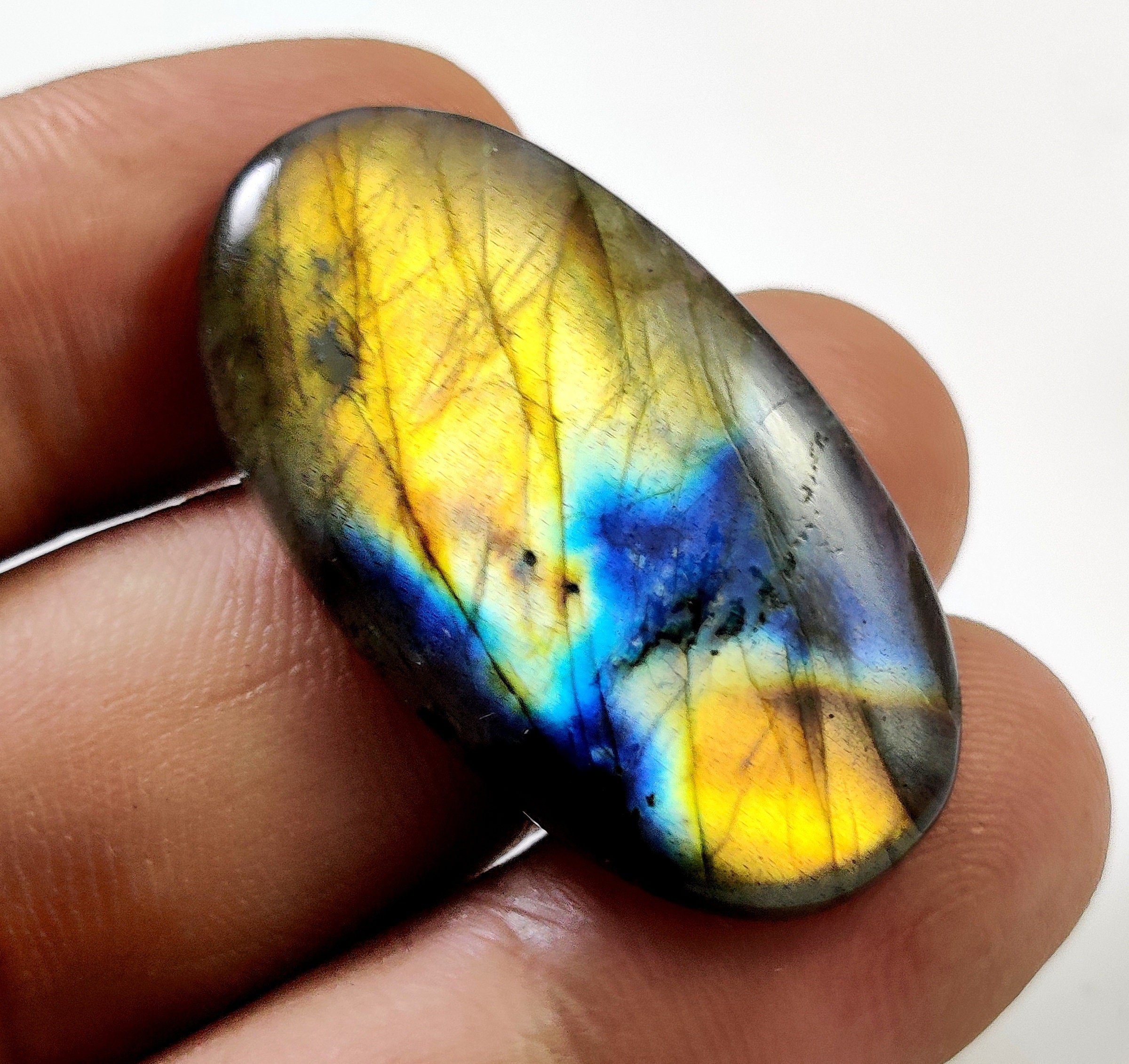
Labradorite: The Enchanting Gemstone of Shifting Hues and Mystical Lore
In the vast and wondrous realm of gemstones, where each mineral tells a story of geological marvel and ancient whispers, there exists a stone of unparalleled magic and mystique: Labradorite. It is not merely a rock but a canvas of cosmic light, a piece of the aurora borealis captured within the earth’s embrace. With its extraordinary play of color, known as labradorescence, this gem transforms from an unassuming grey or black stone into a kaleidoscope of iridescent blues, greens, yellows, oranges, reds, and even purples with a mere flick of the wrist. It’s a stone that doesn’t just reflect light; it dances with it, revealing hidden depths and otherworldly brilliance that have captivated humanity for centuries.
More than just a feast for the eyes, Labradorite carries with it a rich tapestry of symbolism, cultural significance, and geological intrigue. It is revered by mystics, cherished by designers, and sought after by collectors for its unique beauty and perceived potent energies. Join us on a journey to uncover the multifaceted charm of Labradorite, from its fiery birth deep within the Earth to its shimmering presence in our modern world.
A Glimmer of History: Discovery and Early Appreciation
The formal introduction of Labradorite to the Western world is a relatively recent chapter in the long history of gemstones. It was first documented in 1770 by Moravian missionaries on Paul Island near Nain, Labrador, Canada. The region, which gives the stone its enduring name, was a remote and rugged landscape where these missionaries were establishing settlements. They were undoubtedly struck by the stone’s sudden flashes of color amidst the stark wilderness, a phenomenon that seemed to mirror the spectacular Northern Lights often visible in the Arctic sky.
Initially, Labradorite was considered a curiosity, valued primarily by mineralogists and collectors for its unique optical properties. However, its mesmerizing beauty soon caught the attention of jewelers and artisans, particularly in Europe, where it began to appear in ornamental pieces and jewelry during the 19th century. Its popularity steadily grew as more deposits were discovered and its mystical allure became more widely recognized.
While its official discovery is credited to the Moravians, it is crucial to acknowledge that Labradorite was likely known and utilized by the indigenous Inuit peoples of Labrador long before European arrival. Their deep connection to the land and its natural treasures suggests they would have encountered and possibly revered this striking stone. Indeed, many of the myths and legends surrounding Labradorite trace back to these ancient cultures, hinting at a much older, unrecorded history of appreciation and spiritual significance. The stone’s ability to hold and release light would undoubtedly have resonated with a people whose lives were so closely tied to the cycles of light and darkness in the far North.
Born of Fire and Ice: Geological Formation and Where It Is Found
To truly appreciate Labradorite, one must understand its fiery origins deep within the Earth’s crust. Labradorite is not just a gemstone; it’s a specific variety of plagioclase feldspar, a group of minerals that are among the most abundant on Earth, making up a significant portion of the Earth’s crust. Within the plagioclase series, Labradorite occupies a compositional range between albite (sodium-rich) and anorthite (calcium-rich), typically containing 50-70% anorthite.
The Magic of Formation: Exsolution Lamellae and Light Interference
The secret to Labradorite’s captivating labradorescence lies in its unique internal structure. It forms primarily in mafic igneous rocks, such as basalt, gabbro, and especially anorthosite, which are rich in iron and magnesium and crystallize from molten magma or lava. As this molten rock slowly cools, the plagioclase feldspar minerals within it begin to crystallize.
During this slow cooling process, a fascinating phenomenon called "exsolution" occurs. The homogenous plagioclase feldspar separates into thin, parallel layers or lamellae of two different plagioclase compositions. These layers, which are often submicroscopic (on the order of 10 to 100 nanometers thick), are composed of alternating sodium-rich (albite-like) and calcium-rich (anorthite-like) plagioclase.
When light strikes these incredibly thin layers, it undergoes interference and diffraction. Different wavelengths of light are reflected and scattered at different angles due to the varying refractive indices of the alternating lamellae. This interaction causes certain colors of light to be enhanced and reflected back to the observer, while others are canceled out. As the stone is moved, the angle at which light enters and reflects changes, causing the perceived colors to shift, appear, and disappear – this is the enchanting dance we know as labradorescence. It’s a geological ballet of light and mineral structure, a testament to the intricate processes shaping our planet.
Global Treasures: Where Labradorite is Mined
While its name firmly roots it in Canada, Labradorite is found in various locations around the globe, each contributing to its unique characteristics and market presence.
- Labrador, Canada: The original and namesake source remains an important producer. The Labradorite from this region often exhibits beautiful blue and green flashes.
- Finland (Spectrolite): Perhaps the most famous and highly prized variety, Spectrolite, comes exclusively from Finland. Discovered in the 1940s, Spectrolite is renowned for its extraordinarily intense, full-spectrum labradorescence, often displaying all the colors of the rainbow within a single flash. This superior quality makes it highly sought after and often commands a premium price.
- Madagascar: This island nation is a significant source of Labradorite, producing large quantities of varying quality. Stones from Madagascar often exhibit strong blue, green, and gold flashes, and are a common sight in the global market for jewelry and carvings.
- Russia: Deposits have been found in the Ural Mountains and other regions, often yielding material with good blue and green flashes.
- Norway: Smaller deposits exist, sometimes producing material with a distinct iridescent sheen.
- United States (Oregon): While technically a related but distinct gemstone called Oregon Sunstone, it’s worth mentioning here. Oregon Sunstone is a plagioclase feldspar that can exhibit aventurescence (a spangled, glittery effect) due to copper inclusions, and sometimes also displays labradorescence, blurring the lines with traditional Labradorite.
- Australia, Mexico, China, and Ukraine: Other countries also have smaller deposits that contribute to the global supply, each with their subtle variations in color and flash quality.
The geological environment for these deposits typically involves large intrusive igneous bodies of anorthosite or mafic volcanic rocks. These formations are often massive, allowing for the extraction of substantial quantities of rough material, which is then carefully cut and polished to reveal its hidden iridescent beauty.
A Symphony of Light: Physical Characteristics
Labradorite’s physical characteristics are what make it so distinctive and desirable. Its defining feature is, without a doubt, its mesmerizing optical effect, but other properties contribute to its identity and durability.
Color and Labradorescence: The Soul of the Stone
- Body Color: The base color of Labradorite is typically dark grey, smoky grey, black, brownish-grey, or sometimes colorless to pale green. This often dull, unassuming background serves as the perfect canvas for the dramatic play of color.
- Labradorescence: This is the heart and soul of Labradorite. It’s not a color in the stone but rather an optical phenomenon on its surface and just below it. As explained in the formation section, it’s caused by the interference of light waves reflecting off minute, parallel exsolution lamellae within the mineral structure.
- The Flash: The "flash" or "schiller" (a German term for iridescence) manifests as vivid, metallic-like sheens of color that suddenly appear and disappear as the stone is tilted or viewed from different angles.
- Color Range: While blues and greens are the most common and often dominant colors in the flash, high-quality Labradorite can display a full spectrum: electric blues, vibrant greens, golden yellows, fiery oranges, rich reds, and even elusive purples. The interplay of these colors within a single flash is what makes each piece unique.
- Coverage and Angle: The quality of labradorescence is judged by its intensity, the breadth of colors displayed, and how much of the stone’s surface exhibits the flash (coverage). A superior stone will have a broad flash that covers a significant portion of its surface and can be seen from multiple angles.
Hardness: Labradorite ranks 6 to 6.5 on the Mohs scale of mineral hardness. This places it in the moderately hard category. It’s harder than many common household items (like steel), but softer than quartz (7 Mohs) or sapphire (9 Mohs). This means it is durable enough for most jewelry applications, but it can be scratched by harder materials and requires reasonable care to maintain its polish and prevent surface damage.
Clarity and Transparency:
- Labradorite is typically translucent to opaque. This means that while some light may pass through it, it’s not generally see-through.
- Transparent Labradorite does exist but is exceedingly rare and usually lacks the characteristic labradorescence, making it less desirable as a gemstone.
- Inclusions are common in Labradorite and often contribute to its dark body color. These can be needle-like, dust-like, or even metallic, and are generally accepted as part of the stone’s natural character. However, large, distracting inclusions or internal fractures can diminish its value.
Luster: When polished, Labradorite exhibits a vitreous (glassy) to pearly luster, enhancing the play of light on its surface.
Specific Gravity: Its density ranges from 2.68 to 2.72, which is typical for feldspar minerals.
Refractive Index: 1.559 – 1.570.
Crystal System: Labradorite crystallizes in the triclinic system, meaning its three crystallographic axes are all of different lengths and intersect at oblique angles. This complex internal structure is fundamental to its optical properties.
Varieties of Labradorite (and its Relatives):
Understanding the varieties and related gemstones can be a bit confusing, as some are distinct while others are simply specific manifestations of Labradorite itself.
- Spectrolite: This is the most renowned and prized variety of Labradorite, exclusively found in Finland. What sets Spectrolite apart is the extraordinary intensity and full-spectrum range of its labradorescence. While most Labradorite might flash with blues and greens, Spectrolite often reveals fiery reds, oranges, yellows, and purples alongside the blues and greens, all within a single, vibrant flash. Its brilliance and comprehensive color display make it highly collectible.
- Rainbow Moonstone (White Labradorite): This is where much confusion arises. Despite its name, "Rainbow Moonstone" is not a true moonstone (which is orthoclase feldspar with adularescence). Instead, Rainbow Moonstone is actually a colorless or white variety of Labradorite that exhibits a distinct blue or multi-colored labradorescence, similar to the phenomenon seen in typical Labradorite. It is chemically and structurally Labradorite, just with a lighter body color. Its resemblance to true moonstone’s milky sheen and blue flash led to its common market name, but gemologically, it’s a member of the Labradorite family.
- Andesine-Labradorite (Oregon Sunstone): This is a distinct but related plagioclase feldspar. While it falls within the compositional range that overlaps with Labradorite, it’s famous for its reddish body color and often exhibits aventurescence (a glittery effect) due to tiny copper inclusions. Some Oregon Sunstones also display labradorescence, making the distinction even more nuanced. Gemologists use precise compositional analysis to differentiate it, but for practical purposes, its unique color and aventurescence usually set it apart.
Whispers of the Ancients: Symbolism, Cultural Meaning, and Folklore
Labradorite’s dramatic visual transformation has naturally led to its deep association with magic, mystery, and spiritual awakening across various cultures and belief systems. It is often regarded as a stone that bridges the mundane and the mystical, a beacon for those seeking deeper understanding and connection.
The Inuit Legend: Aurora Borealis Captured
The most famous and evocative myth surrounding Labradorite comes from the indigenous Inuit people of Labrador, Canada. Their legend tells of a mighty warrior who, upon seeing the spectacular Northern Lights (Aurora Borealis) trapped within rocks along the coast, struck them with his spear to release the celestial fires into the sky. However, he couldn’t free all of them. Some of the vibrant lights remained encased within the stones, giving birth to Labradorite. This myth beautifully encapsulates the stone’s inherent magic, linking its flashes of color directly to the ethereal dance of the aurora. It speaks to a profound respect for nature’s power and the belief that the divine can manifest in tangible forms.
Modern Metaphysical Interpretations: The Stone of Transformation and Protection
In contemporary metaphysical and New Age practices, Labradorite is celebrated for a wide array of powerful properties, earning it titles such as "The Stone of Transformation," "The Stone of Magic," and "The Shaman’s Stone."
- Protection and Aura Cleansing: Labradorite is highly regarded as a protective stone, creating a shield for the aura and protecting against negative energies from the outside world. It is believed to deflect unwanted energies from the aura and prevent energy leakage, keeping one’s personal energy strong and balanced. This protective quality extends to psychic protection, guarding against psychic vampirism or negative influences.
- Enhancing Intuition and Psychic Abilities: Its shimmering, shifting colors are seen as a metaphor for the veil between worlds. Labradorite is thought to awaken one’s innate intuitive and psychic abilities, enhancing clairvoyance, telepathy, and communication with higher realms. It encourages introspection and helps one to access inner wisdom and spiritual guidance. Many use it during meditation to deepen their spiritual experiences and connect with their higher self.
- Stone of Transformation: As a stone that appears to transform with every angle, Labradorite is strongly associated with personal transformation and change. It is believed to help individuals navigate periods of change, imparting strength, perseverance, and clarity. It encourages self-discovery and the unveiling of one’s true purpose and destiny.
- Creativity and Inspiration: The vibrant colors sparking within the stone are said to ignite the imagination, stimulate creativity, and bring forth new ideas. It’s a favorite among artists, writers, and anyone seeking inspiration or a boost to their creative endeavors.
- Reducing Anxiety and Stress: Labradorite is believed to calm an overactive mind, reducing anxiety and stress. It helps to banish fears and insecurities, replacing them with strength and faith in oneself. It can help one to process and release emotional blockages, fostering emotional resilience.
- Chakra Connection: Labradorite is primarily associated with the Third Eye Chakra (Ajna), which governs intuition, insight, and spiritual perception, and the Crown Chakra (Sahasrara), linked to spiritual connection and higher consciousness. Its connection to the throat chakra is also recognized, facilitating clear communication and expression of one’s truth.
- Dream Work: Many believe Labradorite enhances dream recall and promotes vivid, insightful dreams, aiding in understanding unconscious messages and spiritual guidance received during sleep.
- Connection to Atlantis/Lemuria: Some esoteric traditions link Labradorite to the lost ancient civilizations of Atlantis and Lemuria, believing it holds ancient wisdom and knowledge from these advanced societies. It is thought to assist in recalling past lives and tapping into ancestral memory.
While not found in extensive ancient historical records like diamonds or emeralds, the profound visual impact of Labradorite has ensured its place in the modern spiritual landscape, where its symbolism resonates deeply with those seeking growth, protection, and a touch of everyday magic.
From Earth to Elegance: Uses in Jewelry and Design
Labradorite’s extraordinary beauty makes it a highly versatile gemstone, cherished by jewelers, designers, and artisans for its ability to add a touch of magic to a wide array of creations. Its captivating labradorescence ensures that each piece is a miniature work of art, constantly shifting and revealing new facets of its charm.
Jewelry: Showcasing the Flash
The primary goal when cutting Labradorite for jewelry is to maximize and showcase its labradorescence.
- Cabochon Cutting: This is by far the most common and effective cut for Labradorite. A cabochon is a polished but unfaceted cut, typically domed on top and flat or slightly domed on the bottom. This smooth, rounded surface is ideal for allowing the light to interact with the internal lamellae and display the full, uninterrupted flash of color. The cutter must carefully orient the stone to ensure the most vibrant flash appears on the dome of the cabochon.
- Beads and Tumbled Stones: Labradorite is also widely used in beads for necklaces, bracelets, and earrings. Tumbled stones, which are rough pieces polished in a tumbler, are popular for their smooth, tactile feel and are often used in casual jewelry or kept as worry stones for their metaphysical properties.
- Rings: Labradorite rings are incredibly popular, allowing the wearer to constantly admire the stone’s shifting colors. Due to its moderate hardness (6-6.5 Mohs), it is suitable for rings, but care should be taken to protect it from harsh impacts or abrasive surfaces that could scratch or chip it. Bezel settings are often preferred for rings as they offer good protection to the stone’s edges.
- Pendants and Necklaces: Labradorite’s dramatic flash makes it an ideal choice for pendants, where it can be a focal point against the skin or clothing. Larger, well-flashing cabochons are particularly stunning in necklaces.
- Earrings and Bracelets: Smaller cabochons or beads are frequently used in earrings and bracelets, adding a subtle yet captivating shimmer to any outfit.
Jewelry Settings and Metal Pairings:
- Silver: The cool, understated elegance of sterling silver perfectly complements the blue and green flashes often seen in Labradorite. This pairing creates a harmonious, ethereal look that enhances the stone’s mystical appeal.
- Gold (Yellow, White, Rose): While silver is a classic choice, Labradorite can also be stunning when set in gold. Yellow gold creates a warm contrast, particularly with stones that have golden or fiery flashes. White gold provides a look similar to silver but with added luxury. Rose gold offers a contemporary, romantic aesthetic that can beautifully offset the stone’s cooler tones.
- Open-backed Settings: Jewelers often choose open-backed settings for Labradorite. This allows light to pass through the back of the stone, potentially enhancing its internal glow and the visibility of its labradorescence.
- Creative Designs: Labradorite lends itself well to both minimalist, modern designs that highlight the stone itself, and more intricate, bohemian, or art nouveau styles that weave it into elaborate metalwork.
Beyond Jewelry: Decorative Objects and Architectural Use
Labradorite’s appeal extends beyond personal adornment:
- Carvings: Its ability to reveal bursts of color makes it a favorite material for carvers. Spheres, animal figures (like owls or wolves), obelisks, and free-form sculptures are common, with the artist often strategically shaping the piece to emphasize the flash.
- Inlays: Polished pieces of Labradorite can be inlaid into furniture, decorative boxes, or other artistic objects, creating stunning accents that catch the light.
- Architectural Stone: While less common for the gemstone itself, the massive anorthosite rock formations from which Labradorite is extracted are sometimes cut into large slabs and polished for architectural use. These slabs, often called "Labradorite granite" (though technically not granite), are used for countertops, wall panels, or building facades, where their subtle iridescence can create a unique and luxurious effect. The large scale of these applications allows the inherent beauty of the rock, with its embedded Labradorite crystals, to be appreciated in a grand manner.
The versatility of Labradorite, from a delicate pendant to a statement carving, ensures its continued presence in the world of design, offering a touch of natural wonder and otherworldly beauty to any creation.
The Value of the Flash: Market Value Factors and Buying Tips
When purchasing Labradorite, whether for jewelry, collection, or spiritual practice, understanding what contributes to its value and how to assess its quality is crucial. Unlike many gemstones where clarity or carat weight are paramount, for Labradorite, it’s all about the flash.
Key Market Value Factors:
- Quality of Labradorescence (The Flash): This is by far the most important factor.
- Intensity and Brilliance: How bright and vivid are the colors? A strong, electric flash is more valuable than a dull or muted one.
- Color Range: Stones that display a full spectrum of colors (blue, green, yellow, orange, red, purple) are more valuable, with Spectrolite from Finland being the prime example. Red and purple flashes are particularly rare and sought after. Most common Labradorite shows blue and green.
- Coverage: How much of the stone’s surface exhibits the flash? A stone that flashes across a large portion of its surface is more desirable than one with only a small patch of color.
- Angle of Flash: How easily does the flash appear? A stone that flashes from multiple angles with minimal movement is more valuable than one that only flashes from a very specific, narrow angle.
- Clarity and Body Color:
- While inclusions are common, a relatively clean stone with minimal distracting internal fractures or opaque patches is preferred.
- The body color, typically dark grey or black, should ideally provide a good contrast to make the flash stand out. A lighter or clearer body color (as in Rainbow Moonstone) can also be desirable if the flash is strong.
- Cut and Polish:
- A well-executed cabochon cut is essential. The dome should be symmetrical, and the stone should be oriented to display the labradorescence optimally.
- The polish should be smooth and even, without dull spots, scratches, or pits, which can detract from the flash.
- Size: Larger stones with excellent labradorescence are rarer and more valuable. However, a small stone with an exceptional flash can be more valuable than a large stone with a weak or patchy flash.
- Origin: Spectrolite from Finland commands a premium due to its consistently high quality and full-spectrum flash.
- Overall Aesthetic Appeal: Ultimately, the beauty of the stone and how well the flash complements its overall appearance plays a role.
Buying Tips for Labradorite:
- Always View in Various Lighting Conditions: Labradorite’s flash is highly dependent on light.
- Natural Light: This is often the best for assessing the true beauty of the flash.
- Directional Light: Overhead spotlights can make the flash appear strong, but also check it in diffused light.
- Rotate the Stone: Crucially, pick up the stone and rotate it slowly from all angles. Observe how the flash appears, disappears, and shifts. A good quality stone will have a broad flash that is visible from many positions.
- Inspect for Flaws: Look for deep cracks, chips, or significant surface abrasions. While minor inclusions are natural, large ones can affect durability and aesthetic appeal.
- Understand the Varieties: Be aware of the distinction between regular Labradorite, Spectrolite, and Rainbow Moonstone. If a seller is marketing Rainbow Moonstone as "true" Moonstone, they might be misinformed or misleading.
- Beware of Over-Saturated Photos: Online, sellers may use enhanced lighting or photo editing to make the flash appear more vibrant than it is in person. If buying online, look for videos of the stone being rotated, or ask for additional photos in different lighting.
- Buy from Reputable Sellers: Purchase from jewelers or mineral dealers with a good reputation and knowledgeable staff. They can provide accurate information about the stone’s origin and characteristics.
- Consider Your Purpose: If you’re buying for jewelry, prioritize a strong, visible flash. If for metaphysical purposes, a beautiful flash is still desirable, but you might also connect with a stone for its energetic feel, regardless of its visual perfection.
- Price Range: Labradorite is generally an affordable gemstone, especially for common blue/green flashing pieces. Prices can range from a few dollars for small, tumbled stones or beads to hundreds or even thousands for large, high-quality Spectrolite cabochons with full-spectrum flashes. Expect to pay more for exceptional labradorescence, larger size, and Finnish origin.
Preserving the Magic: Care and Maintenance
Given Labradorite’s moderate hardness and specific internal structure, proper care is essential to maintain its beauty and prevent damage.
- Hardness and Scratching: With a Mohs hardness of 6 to 6.5, Labradorite is susceptible to scratches from harder materials like quartz (found in dust), sapphires, or even certain metal tools.
- Storage: Always store Labradorite jewelry or loose stones separately from harder gemstones and metals. Use a soft cloth pouch, a fabric-lined jewelry box compartment, or individual plastic bags to prevent scratching.
- Brittleness and Cleavage: Like all feldspar minerals, Labradorite has distinct cleavage planes in two directions. This means it can be prone to chipping or breaking along these planes if subjected to sharp blows or impacts.
- Wear with Care: Avoid wearing Labradorite jewelry during activities that might expose it to impacts, such as sports, gardening, or heavy housework.
- Setting Protection: For rings, a bezel setting offers the best protection for the stone’s edges.
- Chemical Sensitivity: Labradorite is generally stable to common household chemicals, but it’s always best to err on the side of caution.
- Avoid Harsh Chemicals: Keep Labradorite